Uganda awoke to renewed tension and uncertainty following reports that opposition leader Bobi Wine, born Robert Kyagulanyi, was arrested and taken to an unknown location in an army helicopter shortly after the conclusion of the country’s presidential and parliamentary elections, which were held on Thursday.
For many Ugandans, the news landed not as a shock, but as a painful continuation of a familiar pattern—one that has come to define the country’s electoral cycles and its strained relationship with political dissent.
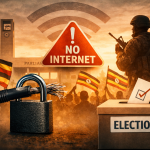
The elections themselves were conducted under extraordinary conditions. In the days leading up to Thursday’s vote, public internet access was suspended nationwide on government orders, severely limiting communication, independent reporting, and real-time election monitoring. As a result, many citizens cast their ballots amid an information blackout, unable to follow developments beyond their immediate surroundings.
By the time polls closed, the country was already tense. Supporters of opposition parties expressed anxiety over the lack of transparency, while families waited anxiously for news, updates, or reassurance in a digital silence that felt heavy and deliberate.
It was within this fragile post-election atmosphere that reports emerged of Bobi Wine’s arrest.
According to accounts from allies and supporters, Bobi Wine was taken by security forces and flown away in a military helicopter to an undisclosed location. No official statement immediately clarified the reasons for his arrest, his condition, or where he was being held.
For his family, supporters, and millions of Ugandans who see him as a symbol of political change, the uncertainty has been deeply distressing. Arrests without clear communication do not only remove a political figure from public view—they also remove reassurance, replacing it with fear, speculation, and silence.
Human rights advocates have long argued that such moments are not just political events, but profoundly human ones: families left without answers, supporters left to worry, and a nation left guessing.
To understand the weight of this arrest, one must understand who Bobi Wine represents to many Ugandans. Rising from a background in music and activism, he became a voice for younger, urban, and economically marginalized citizens who feel excluded from power and opportunity.
To his supporters, he is not merely an opposition candidate—he is a reflection of their frustrations, aspirations, and belief that leadership can change. When he is detained, they do not see only a politician taken away; they see their own hopes placed under guard.
The timing of the arrest—coming immediately after elections—raises serious concerns about political space in Uganda. Post-election periods are critical moments for democratic credibility, requiring openness, dialogue, and restraint. Instead, arrests and information blackouts risk deepening mistrust and widening divisions.
International observers and civil society groups have repeatedly emphasized that the treatment of opposition leaders after elections is as important as the conduct of the vote itself. It signals whether dissent is tolerated and whether democracy extends beyond the ballot box.
With internet access restricted and key political figures detained, many Ugandans report feeling isolated and vulnerable. In a country where digital platforms have become essential tools for expression, documentation, and solidarity, their absence during such a critical moment has left people feeling cut off from the world—and from each other.
Fear thrives in silence. Without clear communication from authorities, rumors spread, anxiety grows, and trust erodes.
As of now, the lack of official clarity surrounding Bobi Wine’s arrest continues to fuel concern both domestically and internationally. Calls are growing for transparency regarding his whereabouts, legal status, and safety.
For Uganda, this moment represents more than a single arrest. It is a test of how the country navigates dissent after the vote has been cast—whether it chooses reassurance over repression, openness over opacity, and dialogue over force.
Until answers are provided, many Ugandans remain in a state of uneasy waiting, hoping not just for the release of a political leader, but for reassurance that their voices, their votes, and their future still matter.