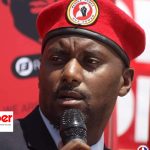
Political analysis Fredrick Edwards Semuwemba Mutengeesa lists six questions that must be answered before 2026 if the National Unity Platform (NUP) to regain it’s 2021 political strength in 2026.
Mr Mutengeesa’s statement in full;
In recent times, the National Unity Platform (NUP) under the leadership of Mr. Robert Kyagulanyi Sentamu, commonly known as Bobi Wine, has faced mounting criticism regarding its lack of focus and strategic direction in managing a national leading political party. The aftermath of the Mpuuga subject matter serves as a glaring example of the disarray within the NUP leadership, indicating a severe lack of strategic direction and focus.
Since the unfolding of events surrounding the Mpuuga subject matter, it has become increasingly evident that the NUP leadership is not effectively directing the party towards its political objectives. Instead, the party appears to be mired in internal conflicts and power struggles, detracting from its ability to function as a cohesive political entity. This lack of strategic direction and focus raises questions about the true nature of NUP as a political party.
Rather than serving as a vehicle for political change and progress, the NUP is being perceived as a mere group utilized for other purposes and gains. This perception undermines the credibility and legitimacy of the party, casting doubt on its future viability as a political force. The trajectory of the NUP as a party paints a bleak picture, characterized by a disgraceful display of leadership roles and responsibilities.
It is imperative that urgent intervention be undertaken to address the pressing issues plaguing the NUP leadership. Key areas requiring attention include:
- Reform Process: Implementing comprehensive reforms within the party structure to foster transparency, accountability, and good governance.
- Arbitrary and Obscurantist Work Methods: Adopting clear and consistent work methods to ensure efficiency and effectiveness in decision-making processes.
- Lack of Internal Conflict Resolution Mechanisms: Establishing robust mechanisms for resolving internal conflicts and disputes in a fair and impartial manner.
- Nepotism, Corruption, and Greed: Combating practices of nepotism, corruption, and greed that undermine the integrity and credibility of the party.
- Extortions, Blackmail, and Defamation: Taking a firm stance against extortion, blackmail, and defamation tactics employed within the party ranks.
6.Lack of Internal Democracy: Promoting internal democracy within the party to empower members and ensure their voices are heard in decision-making processes.
The urgent need for intervention cannot be overstated. Failure to address these critical issues threatens to further undermine the integrity and credibility of the NUP as a political entity. It is incumbent upon party leaders and members alike to rally together in pursuit of meaningful reform and renewal.
In conclusion, the current state of affairs within the NUP leadership is indicative of a party in crisis. Without swift and decisive action, the future of the NUP hangs in the balance. It is time for all stakeholders to come together and chart a new course for the party-one grounded in integrity, accountability, and a renewed sense of purpose. Only then can the NUP reclaim its rightful place as a beacon of hope and progress for the people of Uganda.