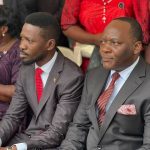
On January 12, 2025, Civil Society Organizations (CSOs) convened a press conference at the offices of PELUM Uganda in Ntinda, Kampala, to express their concerns over the shortcomings of the 2024/2025 National Budget Framework Paper (NBFP). The meeting brought together representatives from PELUM Uganda led by Mr Kanakulya Lawrence, SEATINI Uganda by Jonathan Lubega, Reproductive Health Uganda Richard Mugenyi, Mr. Mugoya Moses among others.
The organizations highlighted critical issues they believe require urgent attention, particularly the misalignment of budgetary allocations with Uganda’s development priorities as outlined in the National Development Plan IV (NDP IV).
They expressed alarm over the UGX 10.4 trillion shortfall in the projected FY2025/26 budget of UGX 57.4 trillion compared to the NDP IV target allocation of UGX 67.8 trillion.
He emphasized that this shortfall directly affects the Agro-Industrialization, Tourism, Minerals, and Sustainable Development (ATMS) sectors, which are critical pillars for economic growth. While NDP IV envisions an allocation of UGX 4.7 trillion for these sectors, the NBFP has only allocated UGX 2.7 trillion, leaving a funding gap of UGX 2 trillion.
“This underfunding undermines Uganda’s efforts to achieve sustainable growth and transformation as laid out in NDP IV,” Kanakulya stated.
The CSOs also raised concerns about the rising domestic arrears. According to the Auditor General’s (OAG) report, domestic arrears increased by 34.4%, from UGX 8.049 trillion in 2022 to UGX 10.818 trillion in 2023. Despite the government’s commitment to addressing these arrears—evidenced by the release of UGX 199.9 billion in the first half of FY2024/25—the progress is deemed insufficient.
Mr. Jonathan Lubega from SEATINI Uganda noted that at the current rate, it would take approximately 54 years to clear the arrears, assuming no new ones are incurred.
“This deprives the private sector of liquidity, hampers job creation, and reduces tax revenues. Worse still, alternative recovery processes, like litigation, are costly and time-consuming,” he observed.
The CSOs highlighted disparities in budget allocations. The Development Plan Implementation (DPI) program is set to receive UGX 22.129 trillion, the largest portion of the proposed budget. However, this figure marks a sharp decline of 38.8% from UGX 36.138 trillion in FY2024/25. The reduction is particularly worrying, as most of the allocation (UGX 20.72 trillion) is directed toward Treasury Operations rather than critical developmental programs.
The CSOs expressed concern over exorbitant fees charged by private schools, which many Ugandan parents struggle to afford. They urged the Ministry of Education to implement the cabinet directive to regulate school fees and ensure fairness.
In addition, they called for more investment in government primary schools. “It is disheartening to see children studying under trees or crammed into overcrowded classrooms,” said Mr. Richard Mugenyi from Reproductive Health Uganda. “The government must prioritize the construction of more classrooms and improve the learning environment in public schools.
Mr. Kanakulya criticized the National Environment Management Authority (NEMA) for alleged discriminatory practices in evicting people from wetlands. He pointed out that while individuals are being evicted, industries are being constructed in the same wetlands.
“This double standard is unacceptable. If wetlands are to be conserved, the policy must apply equally to all, without favoring corporations over ordinary citizens,” Kanakulya said.
Recommendations from the CSOs
- Realign Budget Priorities: Ensure allocations in the FY2024/25 budget align with NDP IV targets to drive sustainable development.
- Address Domestic Arrears: Allocate more resources to settle arrears and provide liquidity to the private sector.
- Invest in Education: Regulate private school fees and improve infrastructure in public schools to guarantee equitable access to quality education.
- Enforce Environmental Laws Equitably: Apply wetland conservation policies uniformly, with no exceptions for industries.
- Monitor Budget Utilization: Strengthen accountability mechanisms to ensure that allocated funds are used effectively for their intended purposes.
The concerns raised by the CSOs highlight significant gaps in the 2024/25 National Budget Framework Paper, which, if left unaddressed, could hinder Uganda’s economic growth and social development. As the budget process advances, the government is urged to take these recommendations into account to create a more inclusive, equitable, and development-oriented fiscal plan.
The CSOs reiterated their commitment to monitoring the implementation of the national budget and ensuring transparency and accountability in public resource management.